Dr. Garg reflects on aging, dignity, and why healthcare requires more than medicine.
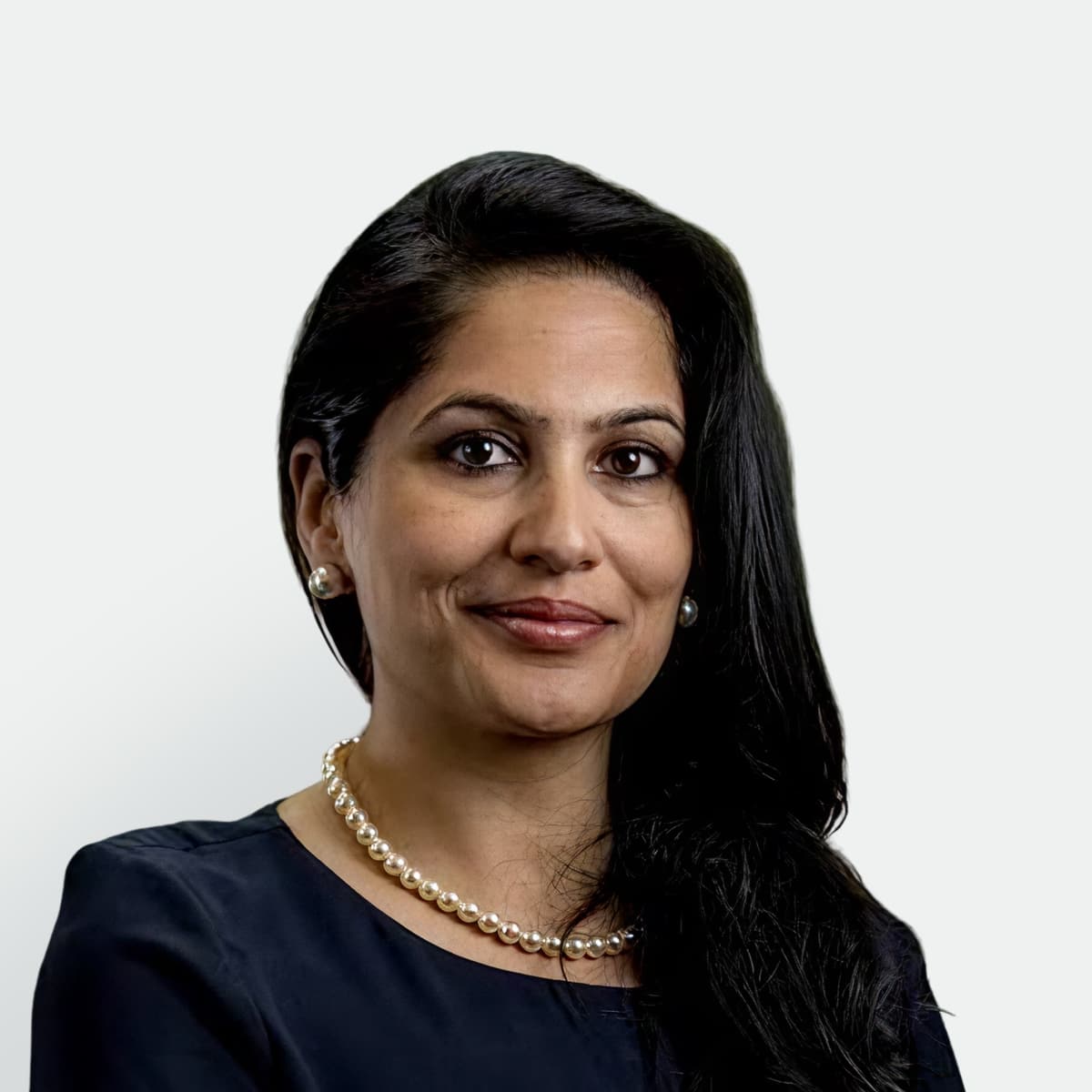
By: Dr. Tanu Garg M.D., Geriatric Medicine
I knew early on that I wanted to do something that mattered. That was the only requirement I gave myself. Somewhere along the way, that conviction grew into where I am today. It carried me from India, where I grew up in a family that valued education but had no physicians, to the United States, through training in family medicine and ultimately into geriatrics, a field that requires me to slow down, to listen deeply, and to see people in their most vulnerable seasons of life.
If I trace the path honestly, I think of my grandmother. She often said she wished there had been a doctor in the family, someone we could trust when health questions arose. Perhaps that stayed with me more than I realized at the time.
Geriatrics found me gradually. During my training and early practice in family medicine, I realized that the patients who needed the most time, who required patience, coordination, and creativity, were older adults. Many had lived extraordinary lives. They had been teachers, scientists, lawyers, caregivers. While sitting in front of me, they were navigating loss: of mobility, memory, independence, certainty. A very human experience.
There is a phrase I often think about: you are a man once and a child twice. In geriatrics, you witness this truth unfold. My role is not only to treat disease but to help patients and their families navigate this stage with dignity. I am a physician, yes, but also an advisor, a translator, and often a witness. I am there to connect the medical to the personal, the clinical to the lived reality.
The word connect is what brings me to the work we do at Peninsula Healthcare Clinic (PHC).
In many traditional clinical settings, care is focused, efficient, and specialized. That system is essential, but it has its limits. It is not built to hold the full weight of someone’s life circumstances. We are asked to see so much more at PHC.
When a patient comes to us, they are far more than a diagnosis. They may be navigating housing instability, food insecurity, trauma, or financial strain. In many ways, these realities shape their medical conditions.
Take a condition like diabetes. In a well-resourced environment, we talk about medication adherence, diet, exercise, regular follow ups. This is manageable. But what if a patient does not have stable housing? What if they cannot store insulin, cannot access nutritious food, or cannot reliably get to appointments? The same diagnosis becomes a completely different challenge. Over time, complications emerge because the system around the patient has gaps, and those complications could otherwise often be preventable.
This is where PHC becomes indispensable. We think of health in three interconnected dimensions: physical, mental, and social. A prescription may address the physical. Behavioral health support helps address the mental. But without addressing the social, whether someone has food, transportation, safety, or housing, we are only doing part of the job.
The work at PHC extends beyond what is traditionally considered medical. We coordinate care across disciplines. We work with social workers, behavioral health providers, and outreach teams. We connect patients to resources that allow medical care to truly function in their lives.
I often say that what we do is less about doing more medicine and more about making medicine possible. One of the most striking differences at PHC is the mindset. When a patient walks in with complex needs, the response is not that this is too much. The response is let us figure out what we can do. That shift from limitation to possibility can mean life or death for some.
Caring for patients who are unhoused has been one of the most humbling parts of my work. As physicians, we are trained to diagnose and treat. But when you discharge someone without a stable place to recover, it challenges your sense of what care really means. For example, I might recommend physical therapy or mobility support after an injury, which is standard and appropriate care. But then I have to ask, where will that therapy happen? How will they safely use equipment like a walker? How will they follow through without a consistent place to live? It forces you to think differently and to adapt care to the reality in front of you.
It requires creativity, trust, and partnership.
I am deeply grateful for the interdisciplinary teams that make this work sustainable. Without them, medicine alone would fall short. It can feel helpless to prescribe something you know a patient cannot realistically use in their current circumstances. But when you have a team that can help bridge those gaps, you start to move from helplessness to possibility.
This is why community clinics like PHC are foundational.
There is sometimes a tendency to view them through a short-term lens, as services that can be reduced when funding tightens. But that perspective overlooks the long-term impact to the individual and to our community. It is a dangerous way to think. When we invest in preventive care, early intervention, and meeting basic needs, we prevent far more costly and complex issues later.
Over the years, what has kept me in this work are the small daily victories. A patient who finally gets access to medication they have been without. A family that feels supported during a difficult transition. A set of lab values that begins to improve. These moments are deeply meaningful. They are evidence that care, when it is connected and intentional, works.
As PHC marks 20 years, I find myself reflecting on how difficult it can be to sustain this kind of work in a challenging healthcare landscape. Clinics like ours exist because of thoughtful stewardship, community partnership, and a shared commitment to serving those who might otherwise fall through the cracks.
I have been especially struck by the impact of street medicine. It reflects a recognition that even when care is available, not everyone is able to access it. Reaching patients where they are physically and within the circumstances they are navigating, requires a different mindset. It asks us to think beyond what we would typically prescribe and to consider what is possible for someone in that moment.
At the same time, the expansion to 51 Encina creates the structure to support that kind of thinking at a larger scale. By bringing services together and strengthening both clinical and behavioral health in one place, it allows us to approach care more completely and more consistently. Because at the end of the day, you can recommend the right treatment, but if it does not fit into a patient’s reality, it will not work, and that is the gap we are trying to close.