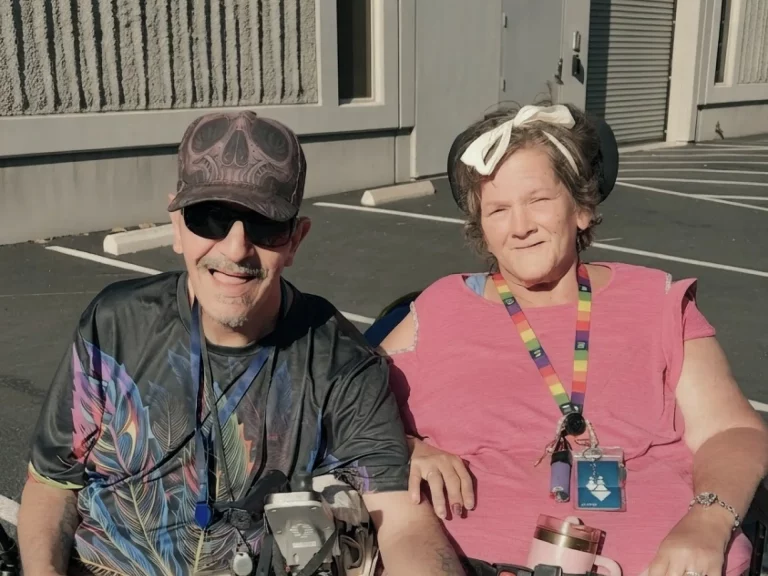

By Eileen Clefstad Richardson, Chief Executive Officer
If you had told me a few years ago that I’d find myself spending time reading the fine print of a ballot measure with ties to organized labor, I wouldn’t have believed you.
I grew up in an Irish and Norwegian immigrant family with deep working-class roots. Many members of my family were union dock builders. Some still are. The values I learned growing up were straightforward: respect working people, respect organized labor, and never forget that strong communities depend on people having a voice in the workplace.
Those values have stayed with me throughout my life and career.
Which is exactly why Proposition 44 caught my attention.
At first glance, the measure seems difficult to disagree with. It asks a question that sounds simple enough: Should healthcare dollars be spent on healthcare?
Most people would instinctively answer ‘of course’. My initial reaction was much the same.
But as I spent more time learning about the measure, I found myself thinking less about the headline and more about a different question:
What should count as healthcare when deciding how healthcare dollars are spent?
I learned from the union dock builders I grew up around that every project has visible work and invisible work. People may notice the finished dock, pier, or waterfront structure once construction is complete, but they do not always see the engineers, surveyors, safety professionals, equipment operators, project planners, inspectors, and skilled tradespeople whose work makes that construction possible. Building maritime infrastructure is a complex effort that depends on many interconnected roles working together. Without those support systems, the finished structure would never exist.
Healthcare is no different.
When most of us think about patient care, we picture the interaction between a patient and a doctor, nurse, therapist, or medical assistant. Those interactions are at the heart of healthcare. But they are supported by many other services that help people access and navigate care in the first place.
Community health centers often provide translation services, patient enrollment assistance, transportation support, outreach, care coordination, and case management. They maintain facilities, invest in technology, meet regulatory requirements, train staff, and ensure that patients’ information remains secure. While these functions may not take place in an exam room, they are often essential to helping patients receive the care they need.
Supporters of Proposition 44 argue that the measure would strengthen accountability and ensure a greater share of healthcare resources reaches patients directly. Those are goals that most people, including me, can appreciate.
The debate, however, is not simply about whether patient care matters. Of course it does. The more nuanced question is how we define healthcare spending and which activities are considered necessary to deliver effective care.
For many nonprofit health centers, especially those serving vulnerable populations, healthcare extends beyond a medical appointment. Patients may be navigating language barriers, transportation challenges, insurance enrollment, housing instability, or other obstacles that affect their ability to access treatment. In those situations, the systems surrounding clinical care can be just as important as the care itself.
Over the years, I have learned to be cautious whenever a complex mission is measured through a single number or percentage. Metrics can be useful. Accountability is important. But numbers alone do not always capture the full picture of how organizations create impact.
That is what makes Proposition 44 a thoughtful and, in my view, important conversation for California voters.
The values I learned from my union family haven’t changed. If anything, they are the reason this measure made me pause and take a closer look. Those values taught me to respect the people doing the work, but they also taught me to understand the entire picture of how the work is made possible.
When I apply that same lens to Proposition 44, I find myself asking whether we have fully considered everything required to keep community health centers strong, accessible, and responsive to the people who depend on them.
Reasonable people can come to different conclusions. But before casting our votes, I believe it’s worth looking beyond the simple question of where dollars are spent and considering what should count as healthcare when deciding how healthcare dollars are spent.
Because in healthcare, as in dock building, it’s often the work that happens behind the scenes that makes successful outcomes possible.
——
Publication note:
The views expressed in this article are those of the author and are intended to encourage thoughtful consideration of Proposition 44 and its potential implications for community health centers and the patients they serve. Readers are encouraged to review official voter information and a variety of perspectives before forming their own conclusion